Scoliosis Treatment in Kuala Lumpur & PJ
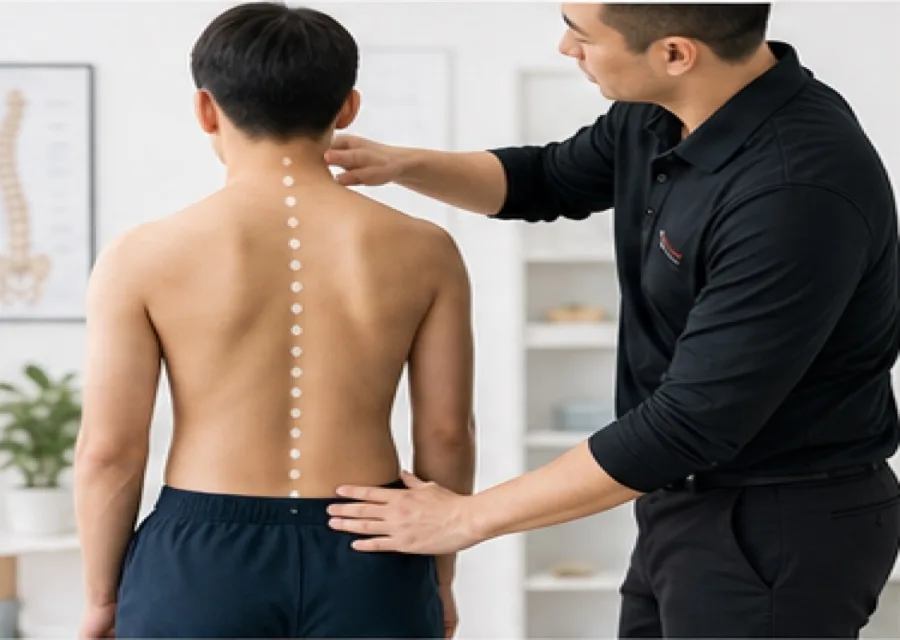
Scoliosis is a three-dimensional spinal curve that may appear as a C-shaped or S-shaped pattern. It can affect adolescents during growth or adults with idiopathic, degenerative or longstanding curves. One Spine TTDI provides assessment-first conservative management for posture, movement and scoliosis-related symptoms; we do not promise to straighten every curve.
What is the Schroth Method?
Schroth method is a specialised, internationally recognised exercise approach for scoliosis. Unlike general exercise, it uses three-dimensional breathing and posture correction tailored to each person’s curve pattern. Schroth Best Practice is the developed version of the original Schroth therapy.
Source: Schroth Best Practice Academy (schrothbestpractice.com)
Assessment-first conservative care
The pathway may include an initial assessment, an individualised exercise plan and progress reviews. The plan is adjusted to symptoms, curve presentation, growth stage, movement tolerance and goals rather than promising a fixed number of sessions.
Who may benefit?
Assessment may be relevant for adolescents with idiopathic scoliosis, adults managing discomfort or posture, and selected post-operative rehabilitation when the treating medical team considers exercise appropriate.
Scoliosis Treatment in Kuala Lumpur
For patients in Kuala Lumpur and Petaling Jaya searching for scoliosis treatment, One Spine TTDI provides assessment-first conservative care under one roof — chiropractic, physiotherapy, Schroth-based exercise and rehabilitation. The first visit is RM238 and includes consultation, a posture and movement assessment, a 3D AI posture scan, explanation of findings and first care where suitable. Where the assessment suggests another pathway, we refer or arrange imaging review rather than promise a fixed outcome.
Schroth Method vs Other Scoliosis Care Options
| Option | What it involves | Typically considered for |
|---|---|---|
| Schroth Method (at One Spine) | Three-dimensional breathing and posture correction exercise tailored to the curve pattern | Adolescents and adults with scoliosis or posture asymmetry |
| Bracing | A brace worn to support the spine during growth | Usually adolescents with progressing curves, after medical or orthopaedic review |
| General exercise or physiotherapy | Strengthening, mobility and posture habits | General posture and movement goals; less specific to the scoliosis curve pattern than Schroth |
| Surgery | Corrective procedures for selected curves | Selected severe or progressive curves, requiring orthopaedic surgeon assessment and referral |
Frequently Asked Questions
How is the Schroth Method different from general chiropractic or physiotherapy?
The Schroth Method is a specialised, internationally recognised exercise approach for scoliosis. It uses three-dimensional breathing and posture correction tailored to a person’s curve pattern, rather than general exercise alone. It can be coordinated with chiropractic care or physiotherapy when suitable.
Will I need a brace for scoliosis?
Not everyone needs a brace. Bracing decisions depend on age, growth, curve pattern, progression risk and medical assessment. One Spine can explain when referral or brace review may be appropriate.
Can adults improve scoliosis?
Adult scoliosis cannot be promised to straighten. Assessment-first care may help posture awareness, breathing mechanics, movement confidence and symptom management, while structural decisions require appropriate medical review.
How is scoliosis measured?
Scoliosis is typically described by the Cobb angle, the degree of spinal curve measured on an X-ray. Measurement, growth stage and progression risk are read together with symptoms and examination; imaging is arranged or referred when clinically indicated.
Do you see children and teenagers with scoliosis?
Yes. Assessment is available for adolescents with scoliosis or posture asymmetry, starting with a history taken with a parent or guardian and a gentle examination of posture, movement and strength. Care is matched to age and growth stage, with referral where specialist scoliosis management is appropriate.
How much is the first visit?
The first visit at One Spine TTDI is RM238 and includes consultation, assessment, a 3D AI posture scan, explanation and first care where suitable. Follow-up recommendations are discussed after the assessment.
Related pages: One Spine home · Scoliosis screening TTDI · Schroth Method KL · Physiotherapy TTDI · Posture correction TTDI · Ivy Ting