Start with what you feel. We explain common causes, what One Spine checks first, when to worry, and which care options may fit.
Quick answer: This blog hub helps patients in TTDI, Kuala Lumpur, PJ, Damansara, Mont Kiara, and Bangsar choose the right guide for common back pain, neck pain, sciatica, posture, shockwave, and rehabilitation questions. Start with your symptom group, then use the related care pages when you are ready for an assessment-first visit.
Patient guides and recovery notes
Choose a condition group. The featured panel answers the first questions patients usually have, then shows related articles.
Back pain that keeps returning
Choose this if your lower back feels stiff after sitting, keeps coming back, travels down the leg, or affects work and sleep.

Neck pain, headache and arm tingling
Choose this if neck stiffness, headaches, arm tingling, or hand numbness keeps returning during work, sleep, or exercise.

Sciatica and leg nerve symptoms
Choose this if pain, tingling, numbness, or weakness travels from the lower back or hip into the leg.
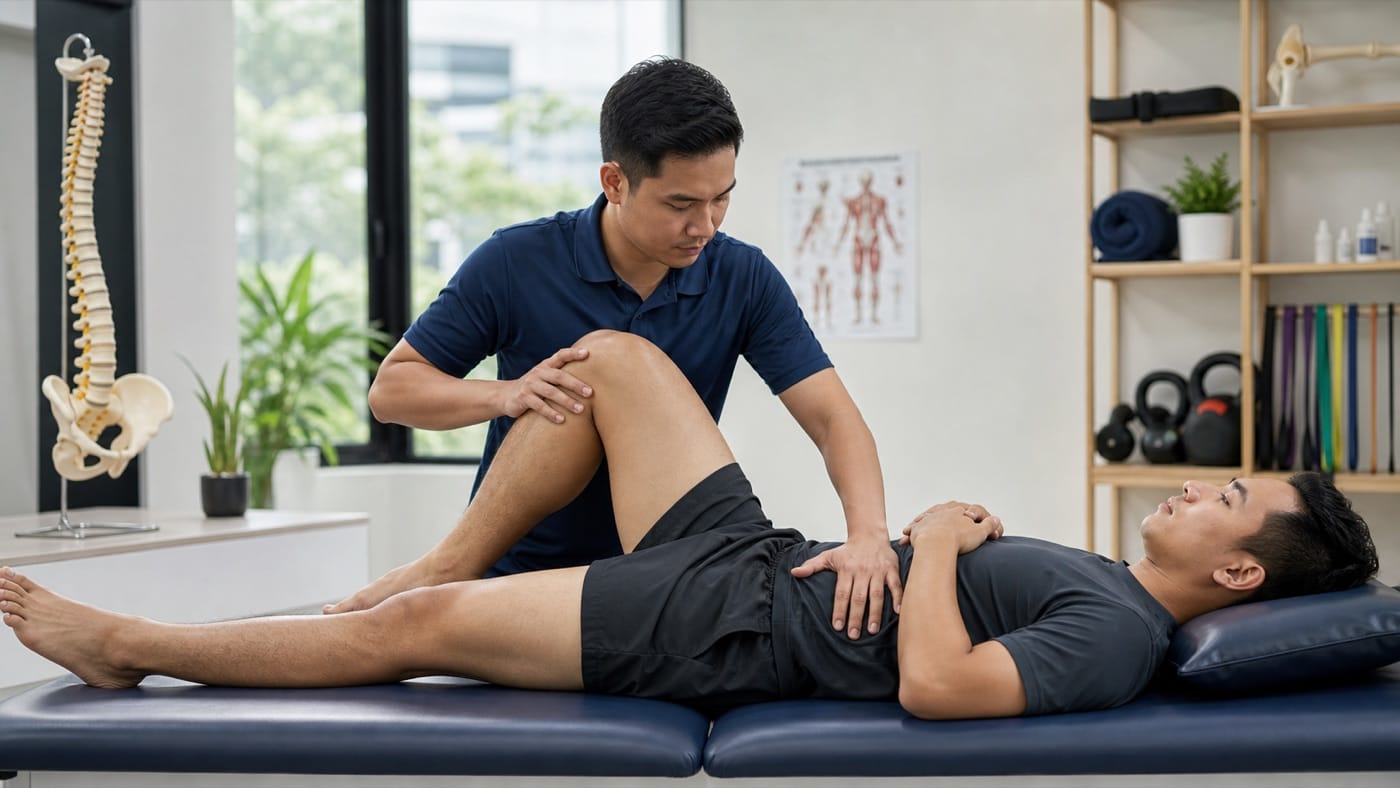
Shoulder pain, shoulder blade pain and tendon irritation
Choose this if shoulder pain affects reaching, lifting, sleeping on one side, desk work, training, or keeps returning.

Shockwave therapy questions
Choose this if you are asking about shockwave for tendon pain, heel pain, Achilles pain, tennis elbow, shoulder pain, or treatment planning.

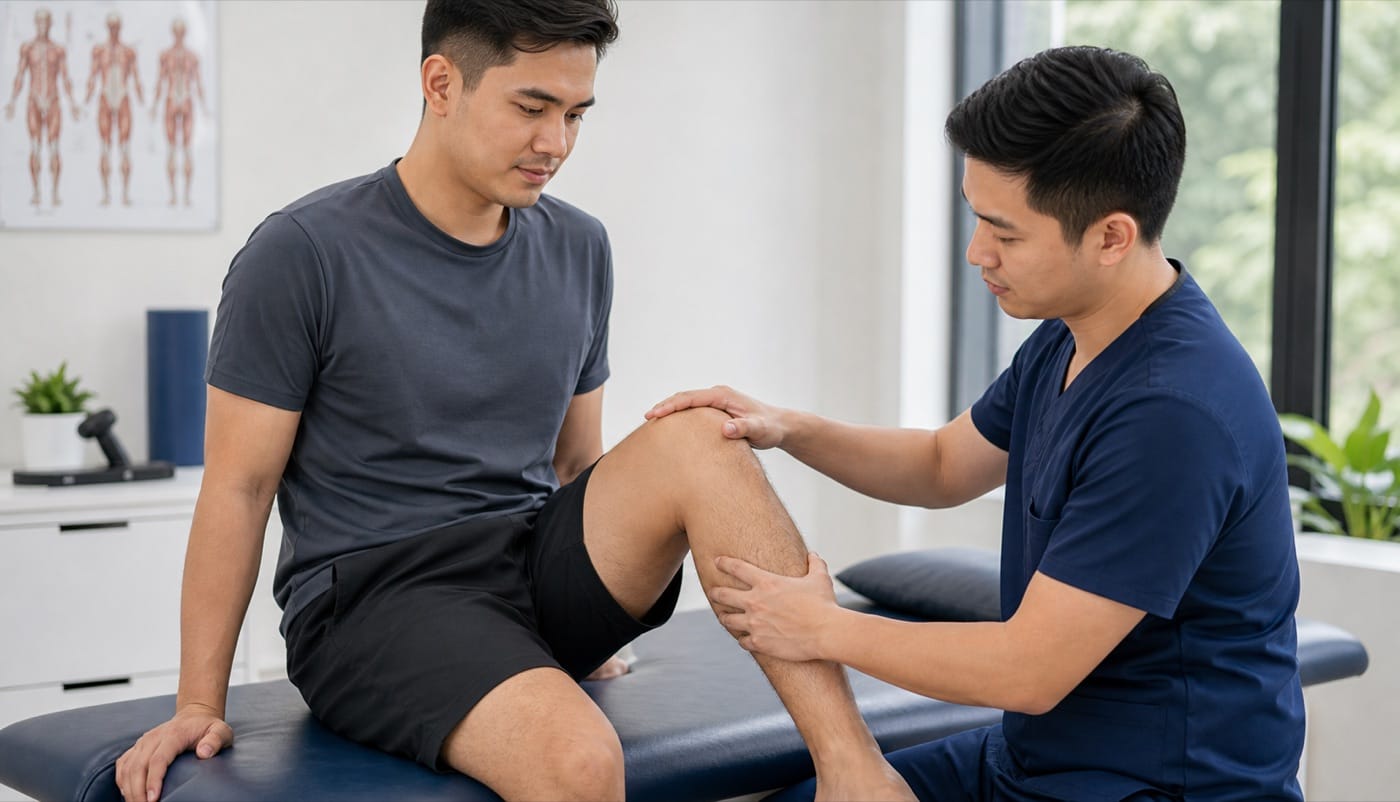
Knee pain during stairs, squats or sport
Choose this if knee pain appears with climbing stairs, kneeling, running, squats, or returning to training.
Wrist pain, hand tingling and numbness
Choose this if you feel wrist discomfort, hand numbness, tingling, or symptoms that may be linked to nerve irritation.
Heel pain, plantar fascia and Achilles tendon pain
Choose this if heel pain is worse in the morning, after walking, after running, or around the Achilles tendon.
Pregnancy back pain and gentle care questions
Choose this if back pain, pelvic discomfort, posture change, or movement discomfort appears during pregnancy.
Questions parents ask before child-focused care
Choose this if you want to understand gentle assessment, posture checks, comfort, and what happens during a child-focused visit.
All patient guides
Browse the full One Spine article library by patient question, symptom, or care option.

Tailbone pain after sitting: when should you get checked?
Why coccyx pain may appear with sitting, driving, falls or postnatal changes, and when assessment is sensible.
Why does my hip hurt when I sit, walk or stand up?
How hip, pelvis, lower back and nerve symptoms can overlap, and what One Spine checks before recommending care.
Why does my lower back keep going into spasm?
Why lower back spasm keeps returning after sitting, bending, lifting or gym training, and what One Spine checks before recommending care.
Slipped disc anatomy and sitting pain
A patient-friendly anatomy guide explaining what a slipped disc means, why long sitting may aggravate symptoms, and when back or leg pain should be assessed.
Can I exercise or go to the gym with back pain?
How to decide whether to keep moving, modify training, or get assessed before exercising with back pain.
Do I need an X-ray or MRI before seeing a chiropractor?
When X-ray or MRI may be needed before chiropractic care, and why assessment usually comes first for back pain or neck pain.
Chiropractor or physiotherapist for back pain in TTDI, KL or PJ?
How to decide whether back pain needs chiropractic care, physiotherapy, rehabilitation, combined care, or referral after assessment.
Why does my lower back pain keep coming back?
Recurring pain may involve spine mobility, hip tightness, posture, movement habits, or weak core control.
Why does my lower back feel stiff in the morning?
Morning stiffness can be linked to joint restriction, sleep position, muscle guarding, or daily loading.
Why does my back feel tight even after stretching?
Why tightness may return when the underlying movement, joint, or loading pattern has not been assessed.
Back pain treatment KL: why pain keeps coming back
A patient-friendly guide to recurring back pain, assessment, and care options in KL.
When back pain needs assessment
How to know when back pain should be checked instead of waiting it out.
When should I worry about lower back pain?
Warning signs and symptom patterns that should not be ignored.
Can poor posture cause back pain?
How sitting habits, spinal joints, and muscle control may contribute to recurring back pain.
What is the best treatment for slipped disc symptoms?
Assessment first, care options, and red flags that need referral.
Slipped disc treatment KL: what patients should know before choosing care
Plain-language guidance on disc symptoms, assessment, and conservative care options.
L4-L5 and L5-S1 disc bulge: what does it mean?
What lower back disc bulge findings can mean, when symptoms matter, and when nerve signs need review.
Why does my lower back pain hurt after sitting?
Why sitting can irritate the lower back, hips, discs, or muscles.
The 5 posture mistakes desk workers make every day
Practical desk posture checks for office workers with neck pain, back pain, headaches, or shoulder tension.
Do posture correctors really help neck and back pain?
What posture correctors can and cannot do, and why recurring desk pain needs assessment.
Simple desk posture checks for long workdays
A practical checklist for office workers who notice stiffness after sitting or commuting.
Chiropractor vs physiotherapist: which should I see?
How to choose between chiropractic, physiotherapy, rehabilitation, or referral based on assessment.
Chiropractic price in Malaysia: what affects the cost of your first visit?
A practical guide to first visit pricing, assessment scope, and care planning.
What happens during a first chiropractic visit?
What patients can expect during history, assessment, explanation, and care planning.
Does a chiropractic adjustment hurt?
What nervous first-time patients can expect before, during, and after an assessment-first visit.
Why does my spine crack during an adjustment?
A plain-language guide to the cracking sound, safety checks, and why the sound is not the main goal.
Do I have to keep going to the chiropractor forever?
How treatment plans, reassessments, progress checks, and independence should be discussed.
Is it normal to feel sore after a chiropractic adjustment?
What post-treatment soreness can mean, what is not expected, and when to ask for review.
Should I use heat or ice for back pain or neck pain?
Simple guidance on heat, ice, red flags, and when recurring pain should be assessed.
Is my pain muscle, joint, disc, or nerve pain?
How pain patterns can overlap and why assessment is better than guessing from symptoms alone.
Best chiropractor in KL: what patients should look for before booking
How to assess a centre before choosing care for pain, posture, or rehabilitation.
Chiropractor near me in KL or PJ: how to choose the right chiropractor centre
What patients should check before booking a chiropractor in KL, PJ, TTDI, or nearby areas.
How to choose a chiropractor in Kuala Lumpur
What to check before booking: assessment, explanation, consent, red flags, pricing, and care planning.
Neck pain that won't go away
When persistent neck pain may be suitable for chiropractic care, physiotherapy, rehabilitation or referral after assessment.
Do I need an X-ray or MRI before seeing a chiropractor?
When X-ray or MRI may be needed before chiropractic care, and why assessment usually comes first for back pain or neck pain.
Why do I wake up with neck pain or headaches?
Why morning neck pain and headaches may involve sleep position, pillow height, screen habits, jaw tension, or red flags.
Why do my headaches keep coming back?
Recurring headaches may involve neck stiffness, screen time, sleep posture, stress, or migraine patterns.
Why neck stiffness can lead to headaches and shoulder tension
How screen time, sleep position, and joint mobility can affect the neck and upper back.
Why do I feel numbness or tingling in my arm or hand?
Arm symptoms can come from neck, nerve, shoulder, or wrist factors and should be assessed if they persist.
Why does my neck pain get worse after using my phone or laptop?
Screen height, forward head posture, long work blocks, and neck stiffness may all contribute.
Do posture correctors really help neck and back pain?
When a posture corrector may act as a reminder, and when assessment is more useful.
Why does my spine crack during an adjustment?
What the cracking sound may mean and what One Spine checks before recommending adjustment.
Should I use heat or ice for back pain or neck pain?
How to choose heat or ice safely when neck pain, back pain, or stiffness flares up.
Is my pain muscle, joint, disc, or nerve pain?
A practical guide to muscle, joint, disc, and nerve clues before choosing care.
Neck pain from desk work in KL: when to get checked
A guide for office workers with recurring neck stiffness, headaches, or shoulder tension.
Neck pain treatment KL: causes, care options and when to get checked
Common neck pain causes, assessment steps, and conservative care options.
Why does my neck pain keep coming back after stretching?
Why stretching may not solve recurring neck pain when movement control or joint restriction is involved.
Why does my hip hurt when I sit, walk or stand up?
How hip, pelvis, lower back and nerve symptoms can overlap, and what One Spine checks before recommending care.
Slipped disc anatomy and sitting pain
A patient-friendly anatomy guide explaining what a slipped disc means, why long sitting may aggravate symptoms, and when back or leg pain should be assessed.
Is sciatica the same as normal back pain?
Leg pain, tingling, and numbness need a different assessment from local back pain.
Can chiropractic care help sciatica?
When conservative care may be considered and when referral is needed.
Sciatica treatment KL: leg pain, numbness and when to seek assessment
How leg symptoms are assessed before recommending care.
L4-L5 and L5-S1 disc bulge: what does it mean?
How lower back disc bulge findings may relate to leg pain, tingling, numbness, or weakness.
Is my pain muscle, joint, disc, or nerve pain?
How nerve symptoms differ from local pain, and when leg symptoms need prompt assessment.
Why does shoulder blade pain keep coming back?
Shoulder blade pain may involve the neck, ribs, posture, or muscle control.
Why does shoulder pain spread to the arm or hand?
How shoulder, neck, nerve, and soft tissue factors may create spreading symptoms.
Can posture problems cause neck, shoulder and upper back pain?
How posture, ribs, neck mobility, and shoulder control may contribute.
Frozen shoulder treatment KL: symptoms, stages and care options
A plain-language guide to frozen shoulder symptoms, stages, and assessment-first care.
Shockwave therapy for shoulder pain in TTDI & PJ
When shockwave may be considered for selected shoulder tendon pain after assessment.
Shockwave therapy for shoulder pain in TTDI & PJ
When shockwave may be considered for selected shoulder tendon pain after assessment.
Shockwave therapy for tennis elbow in TTDI & PJ
When shockwave may be considered for lateral elbow tendon pain and what we assess first.
Shockwave therapy for Achilles tendon pain in TTDI & PJ
When shockwave may be considered for selected Achilles tendon pain cases after assessment.
Can shockwave therapy help heel pain or plantar fasciitis?
When shockwave may be considered for recurring heel pain, and what we assess first.
Is shockwave therapy painful?
What shockwave may feel like, how intensity is adjusted, and when pain should be reviewed.
How many shockwave therapy sessions do I need?
Why session numbers depend on pain duration, tissue sensitivity, loading, and assessment findings.
Shockwave therapy vs dry needling: which is suitable?
A simple comparison for tendon pain, muscle tightness, and assessment-first care.
Pickleball or padel elbow pain
Why racket sport elbow pain may behave like tennis elbow, and when shockwave may be considered after assessment.
Pickleball or padel elbow pain
Why racket sport elbow pain may behave like tennis elbow, and when shockwave may be considered after assessment.
Shockwave therapy for tennis elbow in TTDI & PJ
When shockwave may be considered for lateral elbow tendon pain and what we assess first.
Why does knee pain happen when climbing stairs?
Stair pain may involve knee loading, hip control, ankle mobility, or previous injury.
Returning to exercise after a sports injury
What to rebuild first: pain control, mobility, strength, balance, and confidence.
Why do I feel numbness or tingling in my arm or hand?
Arm symptoms can come from neck, nerve, shoulder, or wrist factors and should be assessed if they persist.
More One Spine patient guides are available through the related topic pages and site search. This hub keeps the first section focused so patients can choose the most relevant starting point faster.
Quick questions before choosing a guide
Use these short answers to decide whether to read a guide, book an assessment, or seek medical review.
Which One Spine guide should I read first for back pain?
Start with the back pain group if your pain keeps returning, worsens with sitting, or affects work, sleep, walking, bending, or exercise. If pain travels into the hip or leg, also check the sciatica and hip pain guides.
When should pain be checked urgently?
Seek medical review promptly for severe or worsening weakness, numbness, trauma, fever, unexplained weight loss, chest symptoms, or bladder and bowel changes.
Do I need chiropractic, physiotherapy, rehabilitation, or referral?
It depends on assessment. One Spine TTDI checks your pain pattern, movement, nerve signs, posture, strength, activity load, and red flags before recommending chiropractic care, physiotherapy, rehabilitation, shockwave therapy, or referral.
Where is One Spine located?
One Spine Chiropractic & Physiotherapy Centre is located at 38 & 40, Jalan Tun Mohd Fuad 1, TTDI, Kuala Lumpur, near PJ, Damansara, Mont Kiara, and Bangsar.
When pain should not be ignored
These guides are for education. Seek medical care promptly for severe weakness, worsening numbness, trauma, fever, unexplained weight loss, or bladder and bowel changes.
First Visit Pain & Posture Assessment
If you are not sure which guide matches your symptoms, start with an assessment. We check the problem before recommending chiropractic care, physiotherapy, rehabilitation, or referral.
- Pain history review
- Posture and movement check
- Spinal and joint assessment
- Muscle control screening
- Clinical explanation
- Recommended care plan
Start with the right care page
These patient guides connect to the relevant One Spine care pages when you are ready to understand your options.