- info.onespine@gmail.com
- 38 & 40, Jalan Tun Mohd Fuad 1, Taman Tun Dr Ismail, 60000 Kuala Lumpur

Spine, posture, pain and rehabilitation care in TTDI
Patient progress examples
Our Results
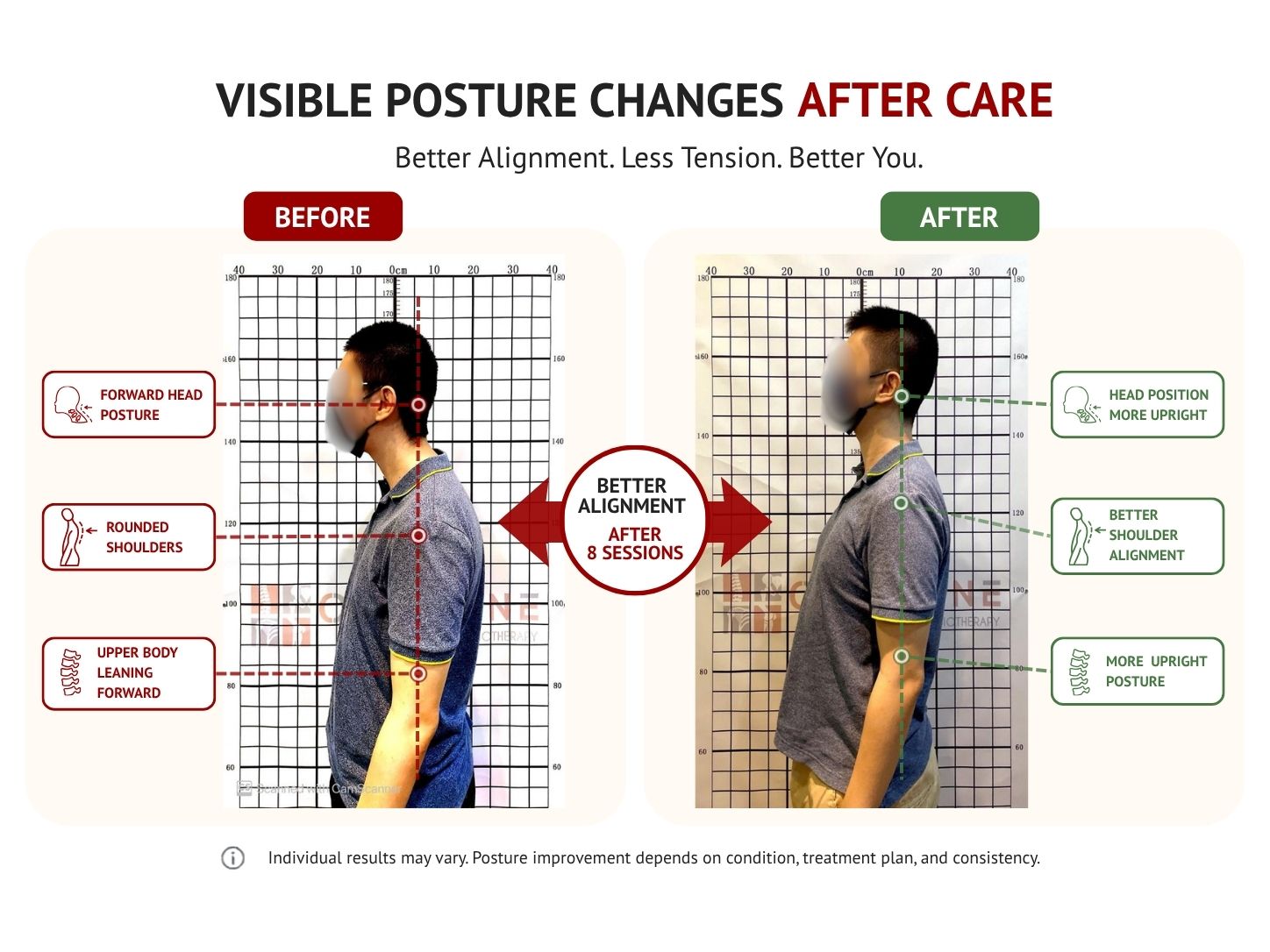
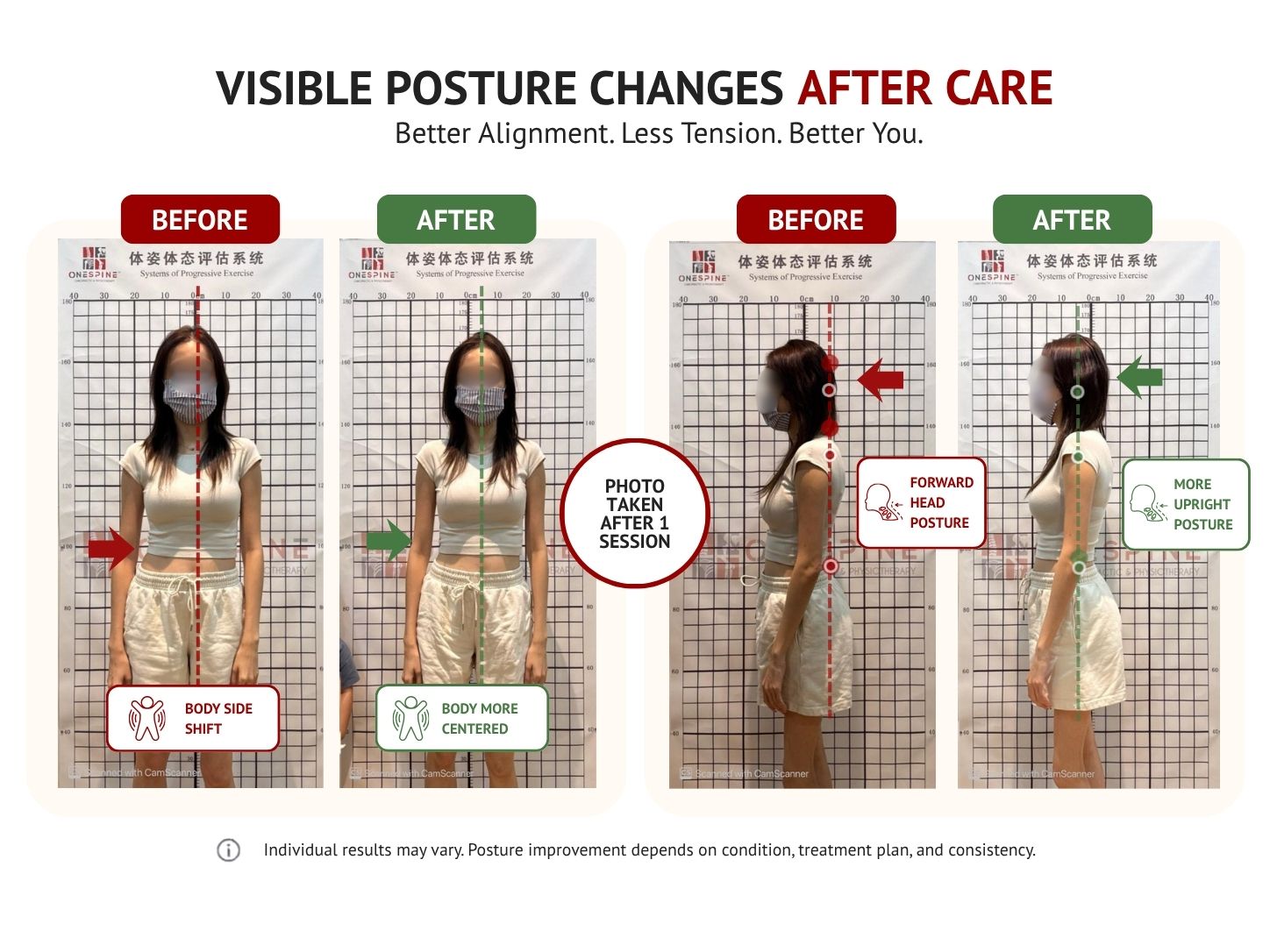
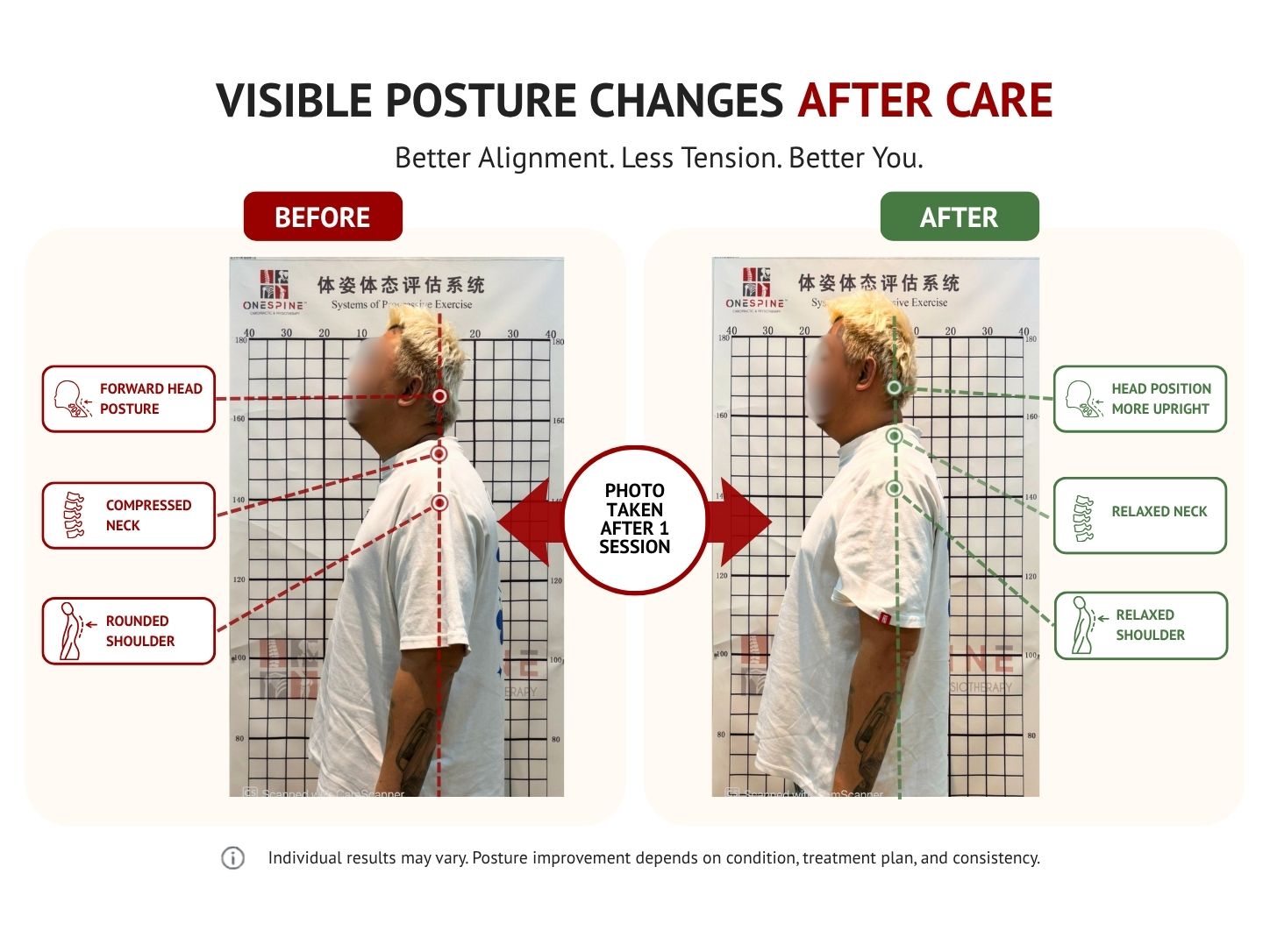
Visible posture progress photos from One Spine Chiropractic & Physiotherapy Centre TTDI. These examples help patients understand what posture-focused care may look like in real clinic settings.
What These Photos Show
The photos below show visible posture changes observed during care. They are useful for understanding alignment, head position, shoulder posture, and how small changes can be seen over time.
We look at the whole posture pattern
Care starts by understanding your symptoms, movement, posture, and daily habits before recommending next steps.
Progress depends on the person
Posture change can depend on condition, consistency, treatment plan, lifestyle, and how long the problem has been present.
Photos are examples, not guarantees
These examples show what has been observed during care, but they do not promise the same result for every patient.
Posture Progress Gallery
Click any photo to view it larger.
 Click to enlarge
 Click to enlarge
 Click to enlarge
 Click to enlarge
 Click to enlarge
 Click to enlarge
 Click to enlarge
 Click to enlarge
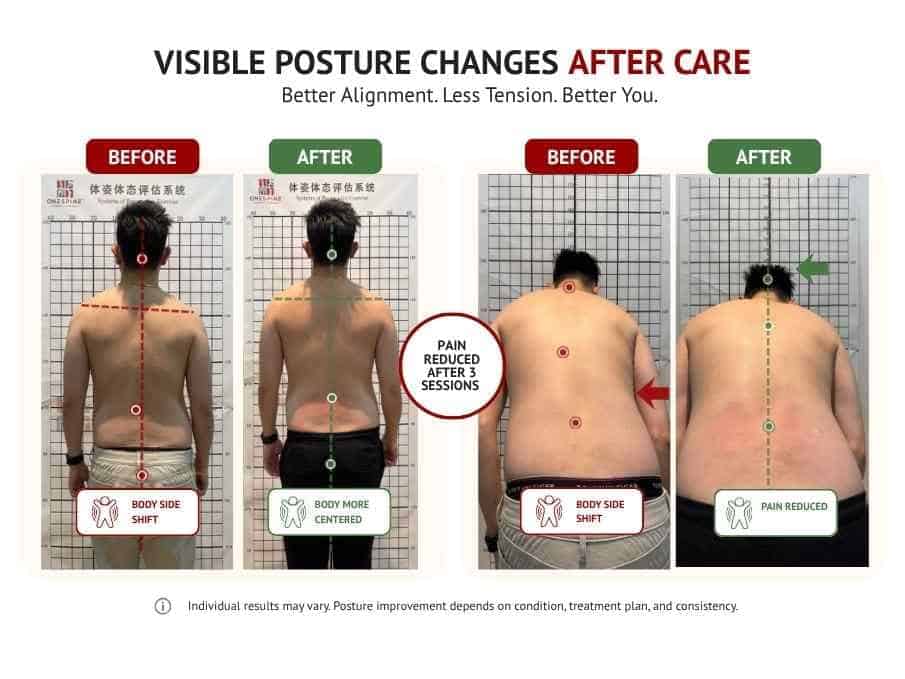 Click to enlarge
Photos are used as educational examples only. A proper consultation is needed to understand your condition, treatment suitability, and expected care plan.
Want to understand your posture or pain?
A first visit helps us assess your symptoms, posture, movement, and care options before recommending a suitable plan.
How to Understand Posture Progress Photos
The examples on this page show posture and movement changes observed during care at One Spine TTDI. They are shared as educational examples only; every patient starts with different symptoms, habits, goals and assessment findings. A photo can help patients understand visible change, but the more important question is whether the person also feels, moves and functions better in daily life.
Results start with assessment, not a photo alone
A posture photo can show visible change, but it does not diagnose the reason for pain or prove that one treatment is suitable for everyone. Before recommending care, we review symptom history, movement, joint function, muscle control, daily habits and relevant red flags. This matters because two people can look similar in a photo but have different pain triggers, work demands, strength levels, previous injuries and recovery needs.
Why posture may change during care
Posture can be affected by joint stiffness, muscle guarding, strength, breathing habits, desk position, phone use, sleep position, sports load, previous injury and confidence in movement. Care may focus on several of these factors at the same time. For example, a desk worker may need neck and upper-back mobility, shoulder control and work-position advice, while an active patient may need strength, balance and return-to-training progressions.
What care may include
Depending on assessment findings, care may include chiropractic, physiotherapy, rehabilitation exercises, soft tissue work, posture guidance, mobility work, strengthening, dry needling, shockwave therapy or referral when another opinion is more appropriate. The care mix can change over time as symptoms settle, movement improves and the patient is ready for more active rehabilitation.
Progress is measured in more than appearance
A useful plan should also consider pain behaviour, sleep, sitting tolerance, walking, work comfort, training confidence, balance, strength and ability to perform daily activities. Visible posture change is only one part of the bigger clinical picture. Patients often care most about practical outcomes such as sitting through work, carrying a child, driving without stiffness, returning to gym training or waking with less discomfort.
Why individual results vary
Age, symptom duration, work demands, previous injuries, exercise habits, recovery, stress, medical conditions and consistency with home guidance can all affect progress. Some patients improve quickly, while others need a slower rehabilitation plan or medical review. This is why we avoid promising a fixed number of visits or the same result from a photo example.
When to seek assessment
Assessment may be useful if back pain, neck pain, headaches, shoulder tension, sciatica-like symptoms or posture concerns keep returning despite rest, stretching, massage or medication. We look beyond the painful area before recommending care. This can include checking how the spine, hips, shoulders, knees or feet contribute to the way the body loads during sitting, standing, walking, lifting or exercise.
Read more assessment notes
When referral may be needed
We may recommend medical review or imaging if symptoms involve severe trauma, progressive weakness, fever, unexplained weight loss, loss of bladder or bowel control, worsening neurological signs or pain that does not match a conservative-care pattern. Referral is not a failure of care; it is part of choosing the right pathway when symptoms need more investigation.
A careful way to use this page
Use these photos to understand the type of change some patients notice during care, not as a promise of a specific outcome. The right next step is to understand your own assessment findings and choose care based on those findings. If your main goal is pain relief, better posture, exercise confidence or long-term movement support, the plan should be matched to that goal rather than copied from another patient.
Questions patients often ask about results
Patients often ask whether posture can change, how long it takes, whether the change will last and whether they need chiropractic, physiotherapy or exercise. The honest answer is that it depends on the assessment. Lasting change often requires a combination of symptom care, movement retraining, strength work and practical changes to daily habits.
How home guidance supports progress
Home guidance may include simple mobility drills, strengthening exercises, walking or sitting advice, sleep-position changes, warm-up adjustments, desk setup changes or activity pacing. These details help patients carry progress into normal life instead of relying only on centre appointments.
Why follow-up checks matter
Follow-up checks help compare symptoms, movement and function against the first visit findings. If the plan is working, care may gradually shift toward self-management and exercise confidence. If progress is not matching expectations, the plan should be reviewed instead of repeated without question.
For patients comparing centres and practices
When comparing posture or spine centres and practices, look for assessment, clear explanation, realistic expectations, practical home advice and referral judgment. Before-and-after photos are useful only when they sit beside careful clinical reasoning and honest discussion of limits.
What a posture check may include
A posture check may include standing posture observation, movement range, spinal and shoulder movement, hip control, balance, breathing pattern, muscle control and how symptoms behave during daily positions. The goal is to understand which findings are relevant to the patient, not to label every posture variation as a problem.
How chiropractic and physiotherapy may work together
Some patients benefit from hands-on care to improve comfort and movement, while others need more exercise-based rehabilitation. Many plans use both. Chiropractic may support joint movement and symptom modulation when appropriate; physiotherapy and rehabilitation may support strength, control, load tolerance and return to daily activities.
Why education is part of the result
A patient who understands why symptoms return can make better decisions between visits. Education may cover work posture, training load, rest, walking, lifting, phone use, sleep position, exercise form or when to pause an activity. These details often matter as much as the visible change in a photo.
What realistic progress can look like
Realistic progress may mean less frequent flare-ups, better sitting tolerance, easier turning or bending, more confidence with exercise, improved posture awareness or clearer control of symptoms. Not every change appears in a photo, and not every photo change means the same thing clinically.
Why One Spine keeps the message cautious
Healthcare results pages can easily become too promotional. Our approach is to show examples while keeping the message balanced: we assess before recommending care, we look beyond the painful area, and we avoid claiming that one method creates the same result for every patient.
How to prepare for your own assessment
Before your visit, it helps to note when the problem started, what movements or positions make it worse, what has helped before, whether there is numbness or weakness, and which daily activities matter most to you. Bringing previous scans or reports can also help when they are relevant.
What families and working adults often want to know
Parents often ask whether posture checks are gentle and age appropriate. Working adults often ask whether long sitting, driving, laptop posture or gym training is part of the problem. These questions are handled during assessment so advice can be matched to real routines around TTDI, KL and nearby PJ.
How this page fits with booking care
If a result example looks similar to your concern, use it as a starting point for questions rather than as a diagnosis. The booking step is still an assessment first. From there, the care plan may involve chiropractic, physiotherapy, rehabilitation, home guidance or referral depending on what is found.
Why photos are only one form of feedback
Photos can help track visible posture, but patients and clinicians should also listen to functional feedback. Can the patient sit longer, sleep better, turn the neck more comfortably, train with more confidence or manage daily tasks with fewer flare-ups? These changes are often more meaningful than appearance alone.
What happens if progress is unclear
If progress is unclear, the plan should be reviewed. That may mean adjusting exercises, checking technique, changing treatment focus, reviewing daily habits, slowing the loading plan or considering medical review. Responsible care does not simply continue the same plan when the response is not clear.
A balanced message about outcomes
The purpose of this page is to share examples while keeping expectations realistic. Some patients notice visible changes, some notice functional changes first, and some need a different care pathway. We do not use these examples to diagnose you online or promise that your result will look the same.
What to expect after viewing these examples
If you book a first visit after viewing these examples, the appointment is still centred on your own story and findings. We ask about your symptoms, goals, work or sport demands, previous care and daily habits before deciding whether chiropractic, physiotherapy, rehabilitation or referral is appropriate.
How to compare your own progress
If you begin care, compare progress using several markers: pain frequency, movement comfort, sleep, sitting or standing tolerance, training confidence, ability to complete work tasks and understanding of what to do at home. This gives a more useful picture than relying on one photo or one symptom score.