
Patient guide | Posture / Neck Pain / Back Pain / Desk Work
Posture correctors may help some people notice slouching, but they rarely solve recurring neck or back pain by themselves. Pain is often linked to movement habits, desk setup, strength, sleep, stress, and tissue sensitivity. At One Spine TTDI, we assess why posture feels difficult before recommending care or exercises.
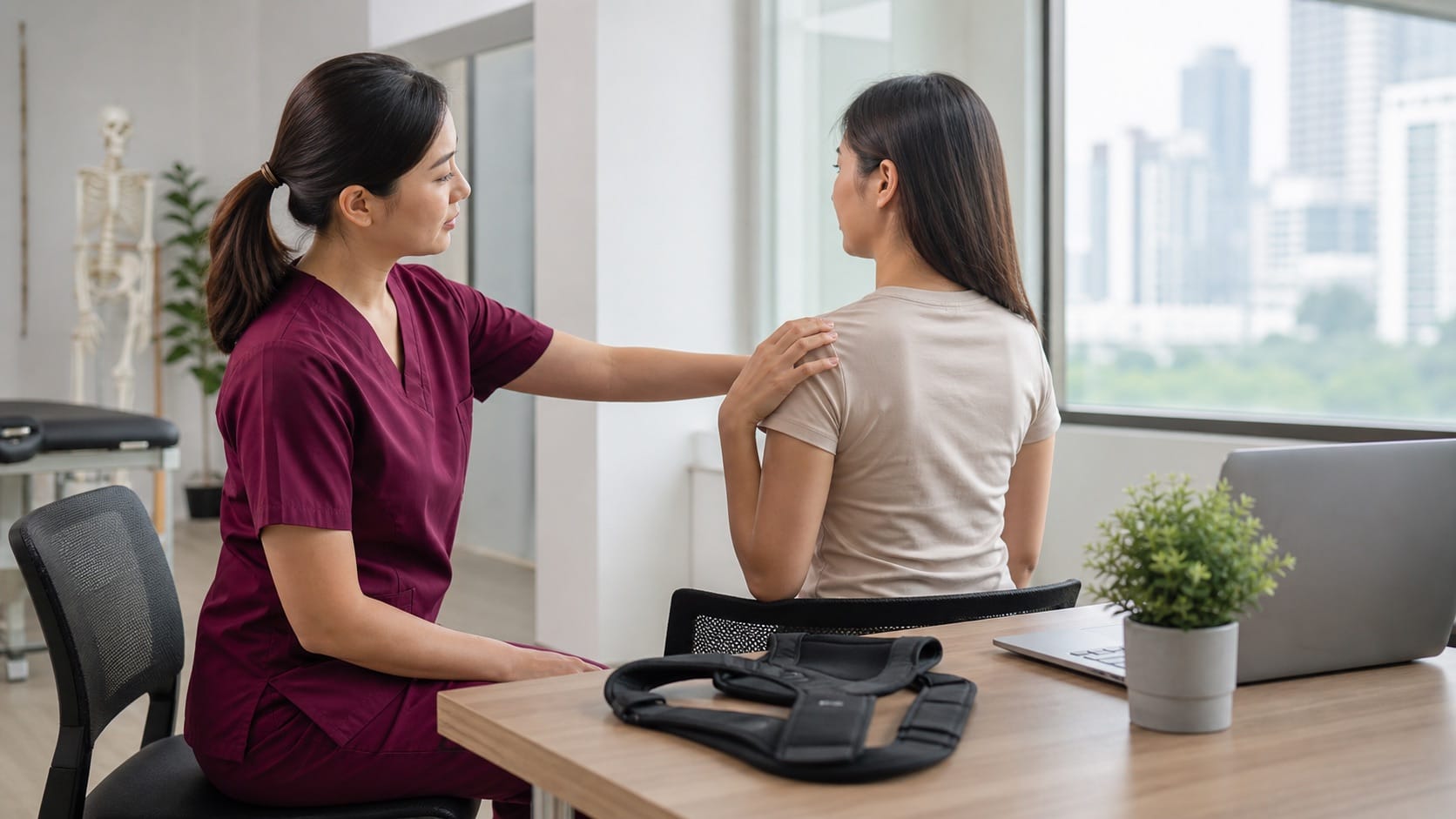
Quick answer: A posture corrector can act like a reminder, but relying on it all day may not build the control your neck, shoulders, and back need. If symptoms keep returning, the better first step is to assess mobility, strength, screen habits, desk setup, and whether pain is coming from the neck, back, shoulder, or nerve irritation.
| Topic | Common clues | What to do | When to get help |
|---|---|---|---|
| Posture corrector | Reminder to sit or stand taller | Use briefly if comfortable | Not enough if pain keeps returning |
| Exercise and movement | Builds control, strength, and tolerance | Needs the right starting level | Can irritate symptoms if prescribed blindly |
| Assessment | Identifies neck, back, shoulder, nerve, or workload factors | Guides care and exercise selection | Needed for numbness, weakness, trauma, or persistent pain |
What does a posture corrector actually do?
Most posture correctors pull the shoulders or upper back into a different position. This can remind you that you are slouching, but it does not automatically improve joint mobility, muscle endurance, screen habits, or pain sensitivity.
Some patients feel temporary relief. Others feel more pressure, shoulder discomfort, or dependency if they wear it too long.
Why does posture pain keep coming back?
Can wearing a posture corrector make pain worse?
It can for some people, especially if it is too tight, worn too long, or used when symptoms involve the shoulder, neck, or nerves. Stop using it if it increases pain, tingling, numbness, or headaches.
What does One Spine assess before giving posture advice?
We assess before recommending care. We look beyond the painful area. For desk-related posture pain, we may check:
- Neck, upper back, shoulder, lower back, and hip movement
- Desk setup, screen height, chair position, phone habits, and breaks
- Strength, endurance, breathing pattern, and muscle control
- Headache, arm tingling, numbness, or nerve signs
- Red flags and reasons to refer for medical review
For related symptoms, read Why Does My Neck Pain Get Worse After Using My Phone or Laptop? and The 5 Posture Mistakes Desk Workers Make Every Day.
What is a better approach than only wearing a brace?
A better approach usually combines awareness, movement breaks, workstation changes, mobility, strengthening, and symptom-specific care when suitable. A posture corrector may be used briefly as a cue, but it should not replace learning how to move and support yourself comfortably.
When should posture-related pain be checked?
Get assessed if pain keeps returning, affects sleep or work, triggers headaches, travels into the arm or hand, or comes with tingling, numbness, or weakness. Seek medical care promptly for trauma, fever, unexplained weight loss, severe worsening weakness, chest symptoms, or bladder or bowel changes.
Research and clinical sources
These sources support the general clinical discussion. They do not replace assessment for your specific symptoms.
Useful internal links
FAQ
Should I buy a posture corrector for neck pain?
It may help as a short-term reminder, but recurring neck pain should be assessed so the cause is not missed.
How long should I wear a posture corrector?
There is no one rule. If used, it should usually be brief and comfortable. Stop if symptoms worsen.
Can posture correctors fix rounded shoulders?
They may remind you to change position, but lasting change usually needs mobility, strengthening, desk changes, and habit changes.
Is bad posture the main cause of back pain?
Not always. Back pain can involve movement tolerance, strength, joints, discs, nerves, sleep, stress, and activity load. Posture is one factor, not the whole diagnosis.
Book a Desk Posture and Pain Assessment in TTDI
If posture devices only give temporary relief, let us check the movement, strength, desk habits, and symptom pattern before recommending care.
This article is for education only and is not a diagnosis. Please seek medical care promptly for severe, sudden, worsening, or unusual symptoms. Results vary, and suitable care depends on assessment.