PARENT GUIDE | CHILDREN / SCOLIOSIS / POSTURE SCREENING
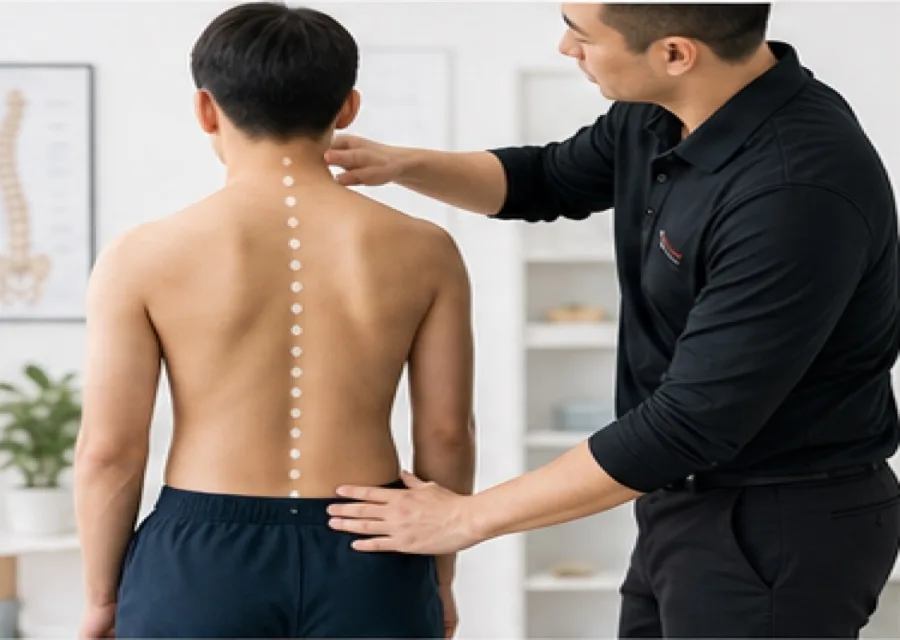
Quick answer: Poor posture can change with position or habit, while scoliosis is a structural three-dimensional curve. A home view cannot confirm the difference. A screening helps decide whether monitoring, exercise guidance, imaging review or referral is appropriate.
Signs parents may notice
- One shoulder or shoulder blade looks higher
- One hip or side of the waist looks different
- The body leans to one side
- Clothes hang unevenly
- The appearance changes during a growth spurt
Why posture and scoliosis can look similar
Children naturally change posture during school, screen time, sport and growth. A shoulder that looks uneven in one photo does not prove scoliosis. The pattern matters: whether asymmetry persists, changes with position, is associated with rib or pelvic changes, and whether there are symptoms or a family history.
What a screening can clarify
A screening may look at posture from several angles, spinal and rib movement, shoulder and pelvic symmetry, balance, movement control and the child’s history. If the presentation suggests a significant or changing curve, imaging or specialist review may be recommended. Screening is a starting point, not a replacement for diagnosis.
How to support your child
Avoid frightening language or telling a child that their spine is “damaged”. Encourage normal movement unless a qualified professional has advised otherwise, note changes during growth, and bring previous reports to the assessment. The right plan may be monitoring, curve-specific exercise, general rehabilitation or referral.
Common questions from parents
Does every uneven shoulder mean scoliosis?
No. Posture, muscle control, shoulder position and normal variation can all affect appearance. A screening is needed before drawing a conclusion.
Does my child need an X-ray?
Not automatically. Imaging may be considered when the screening suggests a significant or progressive curve or when the result would change management.
Can my child still play sports?
Many children remain active, but advice should reflect symptoms, curve presentation, growth stage and any medical guidance. Do not stop all activity based only on a photo.
Arrange prompt review if you notice
Arrange medical review for rapidly changing asymmetry, severe or unusual pain, weakness or numbness, breathing concerns, a recent significant injury, or a child whose symptoms are worsening during growth.
Related pages: Scoliosis treatment KL & PJ · Schroth method KL · Scoliosis screening TTDI
Evidence context: 2016 SOSORT guidelines · Royal National Orthopaedic Hospital overview.
This is parent education, not a diagnosis. A qualified assessment is the appropriate next step when a child’s posture or spinal shape is a concern.