The Schroth method is a specialised exercise approach designed for scoliosis — a sideways curve of the spine. Instead of generic exercise, it uses three-dimensional breathing, posture awareness and muscle support to work with the shape of the curve. This article explains where the method comes from, how it works, and what Schroth-based care at One Spine TTDI involves.
Where the Schroth method comes from
The method was developed by Katharina Schroth in Germany in the early 20th century and has been refined over generations. Today it is taught through dedicated training programs; Ivy Ting at One Spine TTDI is a Certified Schroth Best Practice practitioner, trained through the Schroth Best Practice Academy. Schroth Best Practice is the source we reference for the method’s approach.
How Schroth exercises work
Schroth is built around three ideas:
- Three-dimensional breathing: breathing is directed toward the areas of the trunk that need expansion, working with the curve’s pattern rather than against it
- Posture awareness: learning to sense and correct alignment during daily activities, not just during exercises
- Muscle support: strengthening the muscles that hold improved alignment, so corrections become more automatic
Every person’s curve is different, so Schroth is taught individually rather than as a one-size-fits-all routine.
What a Schroth session looks like at One Spine TTDI
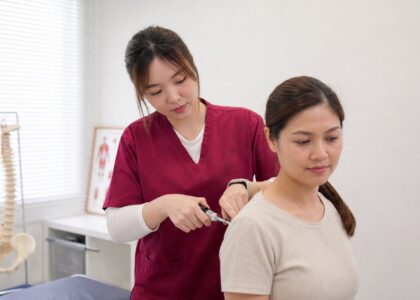
A Schroth program starts with an assessment — posture, movement and a 3D AI posture scan — so the exercises can be matched to your curve and your daily life. Sessions involve guided exercises and breathing work, with home practice between visits. We are clear about what Schroth can and cannot do: it supports posture, movement and comfort around the curve, and larger or progressing curves are managed with orthopaedic input. You can book a scoliosis screening in TTDI as the starting point.
Schroth vs general exercise
General exercise is healthy for most people, but it is not curve-specific. Schroth is designed around scoliosis: the breathing pattern, the direction of stretches, and the muscle groups targeted are chosen according to the curve’s shape. That specificity is the main reason people seek Schroth rather than a standard gym program.
Who is Schroth for?
- Teenagers with scoliosis who want a movement-based approach alongside medical monitoring
- Adults with scoliosis who want posture support and comfort
- People who have had a curve identified and want a clear, structured exercise plan
Schroth is not a replacement for orthopaedic care. We assess, teach the method, and refer for imaging, bracing or surgery decisions when those are clinically indicated — we do not offer bracing or surgery ourselves. See our scoliosis treatment in KL page for the wider picture of how we work.
FAQs
Do I need a diagnosis before starting Schroth?
An assessment first is ideal — a posture and movement check, and imaging when appropriate — so exercises match your actual curve. We can help establish that baseline at a first visit.
How often do I need to do Schroth exercises?
It varies by curve and goal. Guided sessions build the pattern; consistent home practice is usually what makes the difference, and your program is adjusted as you progress.
Does Schroth straighten the spine?
We are honest: Schroth does not promise straightening. Its goals are posture, breathing, muscle support and comfort around the curve. Curve size is followed with orthopaedic input when needed.
Can Schroth help adults?
Yes. Adults use Schroth for posture awareness, comfort and functional support. The exercises are adapted to the adult curve and to daily life.