PATIENT GUIDE | SCOLIOSIS / SCHROTH / EXERCISE
Quick answer: Scoliosis is a three-dimensional spinal pattern. A curve-specific exercise plan may support posture awareness, breathing mechanics and movement confidence, but no exercise can be promised to stop every curve from progressing. Early assessment is useful because children and teenagers may be growing, while adults may need a different focus such as comfort, strength and movement confidence.
What affects the decision?
- Age and growth stage
- Curve presentation and any available imaging
- Pain, breathing or neurological symptoms
- Ability to learn and practise the exercises
- Whether monitoring or referral is needed
What Schroth exercises are designed to do
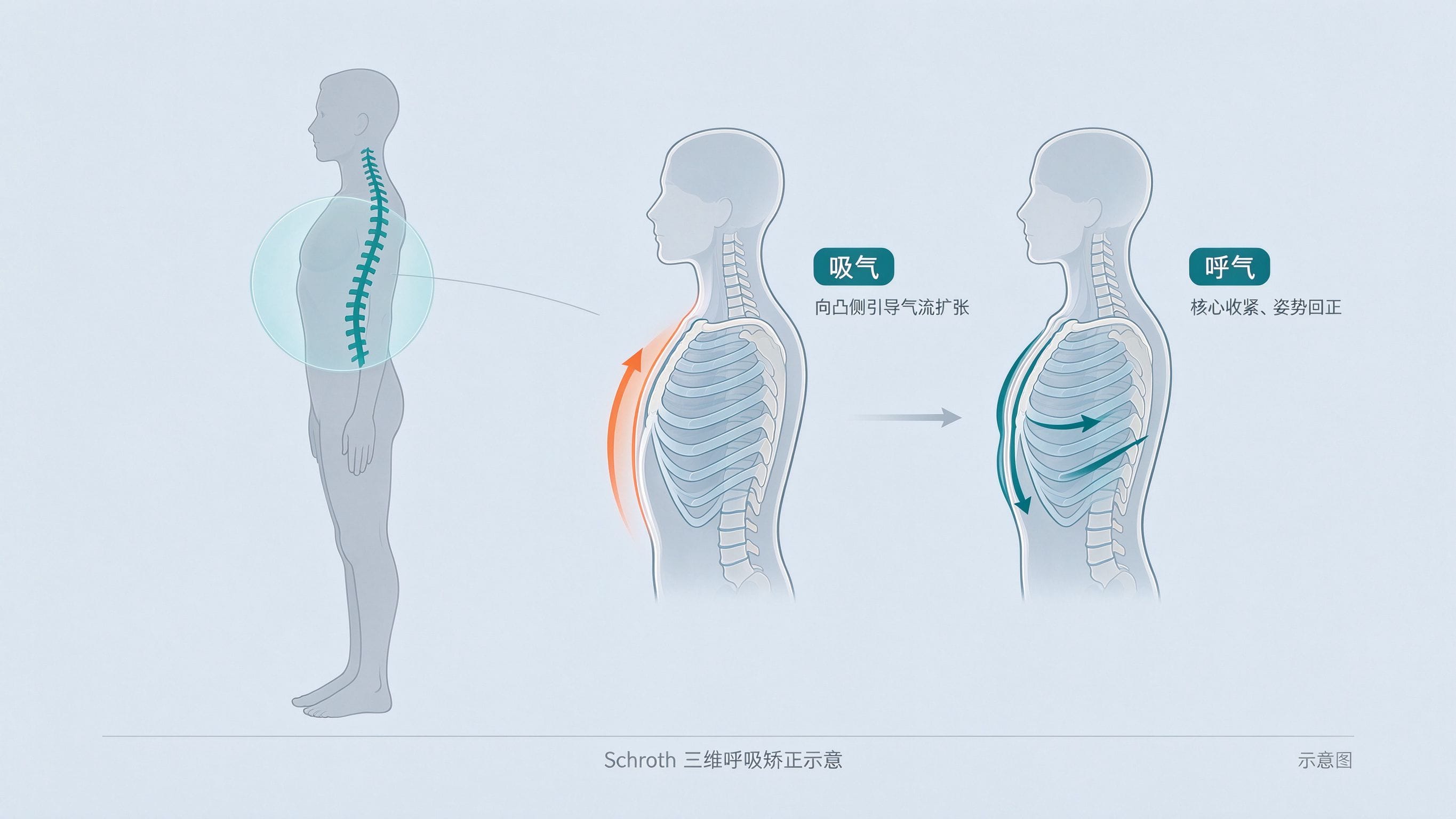
Schroth is a specialised approach using three-dimensional breathing, posture awareness and muscle support around an individual curve pattern. The aim is not to force the spine into one generic position. It is to help the person understand and practise a more controlled, supported posture during exercise and daily movement.
Can it prevent progression?
The honest answer is that this depends on the person and cannot be guaranteed from a website article. For a growing child or teenager, curve size, maturity, growth rate and medical monitoring are important. For an adult, the focus may be symptom management, strength, breathing mechanics and confidence rather than promising structural correction.
Schroth-based exercise may be one part of a conservative plan. It should not replace medical review when a curve appears significant, changes quickly, causes unusual symptoms or requires an imaging-based decision.
How One Spine approaches it
At One Spine TTDI, we start with history, posture, movement, breathing and symptom behaviour. We discuss what can be assessed in the centre and when imaging, orthopaedic review or another pathway may be appropriate. If curve-specific exercise is suitable, the plan is individualised and reviewed rather than sold as a fixed package.
Common questions
Is Schroth a cure for scoliosis?
No. It is a specialised exercise approach that may support posture, breathing, movement and symptom management for selected people. Progress and structural change are not guaranteed.
Should a child stop sports?
Not automatically. Activity advice depends on symptoms, curve presentation, growth stage and medical guidance. A child should not be restricted based only on a website article.
Do I need an X-ray before starting Schroth therapy?
Yes. At One Spine, we require a current standing full-spine X-ray before starting Schroth-based therapy. It helps confirm the curve pattern and Cobb angle so the programme can be planned appropriately. An initial enquiry or assessment can still take place before imaging is arranged.
When to arrange medical review
Seek prompt medical advice for rapidly changing asymmetry, severe or unusual pain, worsening weakness or numbness, breathing concerns, bowel or bladder changes, or a child whose curve appears to be changing during growth.
Related pages: Scoliosis treatment KL & PJ · Schroth method KL · Scoliosis screening TTDI
Evidence context: 2016 SOSORT guidelines · Royal National Orthopaedic Hospital overview.
This is general education, not a diagnosis or a promise that a curve will stop progressing. A personalised assessment is needed before choosing exercise or referral.