Adult scoliosis is more common than many people think. Some adults have a curve that was never noticed in childhood; others develop a curve later in life as the spine ages. The tricky part is that everyday posture can look similar — and the difference only matters once you understand what is structural and what is simply habit. This article explains how adult scoliosis differs from everyday posture, what signs to look for, and how an assessment-first approach at One Spine TTDI can help you get clarity.
What is adult scoliosis?
Adult scoliosis is a sideways curve of the spine measuring 10 degrees or more on the Cobb angle scale. It usually falls into two groups: curves that started in adolescence and were never diagnosed, and curves that develop or progress in adulthood — often described as degenerative scoliosis, where age-related wear on the spine changes its alignment over time.
Adult scoliosis vs everyday posture
Posture and scoliosis both affect how the spine looks, but they are different in an important way. Postural habits — slouching, one-sided sitting, carrying bags on one shoulder — tend to change when the person actively adjusts. Structural scoliosis is a curve that stays even when the person stands as straight as they can. Only a measurement (usually X-ray with a Cobb angle reading) can confirm which one is present, which is why we assess and refer for imaging when appropriate rather than guessing.
Common signs in adults
- One shoulder or hip sitting higher than the other
- One side of the ribs or lower back more prominent when bending forward
- Clothes fitting unevenly, or trouser hems hanging differently
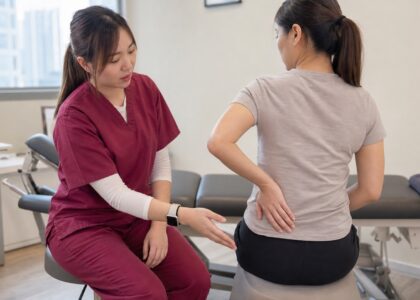
- Back pain or fatigue that feels related to an uneven posture
- In some cases, leg length appearing different when standing
None of these signs confirm scoliosis on their own — they are reasons to check.
When back pain is related to the curve
Back pain and scoliosis can be connected, but the link is not automatic. A curve can change how load is distributed across the spine, and some adults notice more fatigue or discomfort on one side. We are careful not to overstate this: pain has many causes, and the assessment looks at the whole picture rather than blaming every symptom on the curve.
What can help adults with scoliosis
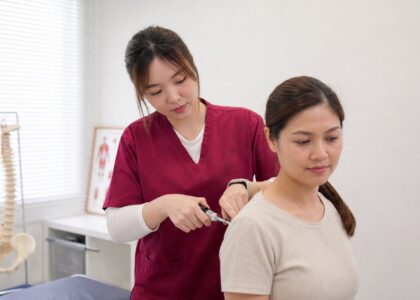
- Assessment first: a posture and movement check, including a 3D AI posture scan, to establish a baseline
- Schroth method: a specialised exercise approach designed for scoliosis, taught by a Certified Schroth Best Practice practitioner at One Spine TTDI — it focuses on posture, breathing and muscle support around the curve. Learn more on our Schroth Method KL page.
- Orthopaedic review when needed: for larger or progressing curves, we refer to the orthopaedic specialist who decides whether bracing, injections or surgery are appropriate. We do not offer those, and we refer rather than overstep the boundary.
If you are unsure whether a curve is present, a scoliosis screening in TTDI is a reasonable first step.
FAQs
Can adult scoliosis be corrected without surgery?
We do not promise straightening. Schroth-based care focuses on posture, movement and muscle support around the curve, and some adults find meaningful improvement in comfort and function. Structural curve size is managed with orthopaedic input when needed.
Is adult scoliosis the same as bad posture?
No. Posture can usually change with attention; structural scoliosis stays when the person stands straight. Imaging is needed to confirm which is present.
Does scoliosis always cause back pain?
No. Many adults with scoliosis have no pain, and pain in someone with scoliosis can come from other causes. The assessment looks at the whole picture.
What does a scoliosis assessment at One Spine include?
A first visit includes consultation, posture and movement assessment, a 3D AI posture scan and explanation at RM238, with referral for imaging or orthopaedic review when clinically appropriate.