
Patient guide | Back Pain / Sciatica / Desk Work
Slipped Disc Anatomy: Why Sitting Long Hours Can Trigger Back and Leg Pain
A slipped disc usually means a spinal disc has bulged or herniated. Long sitting does not automatically cause a slipped disc, but it may aggravate disc-related lower back pain or nerve symptoms in some people. At One Spine TTDI in Kuala Lumpur near PJ, we assess your pain pattern, movement, nerve signs, sitting tolerance, and red flags before recommending care.
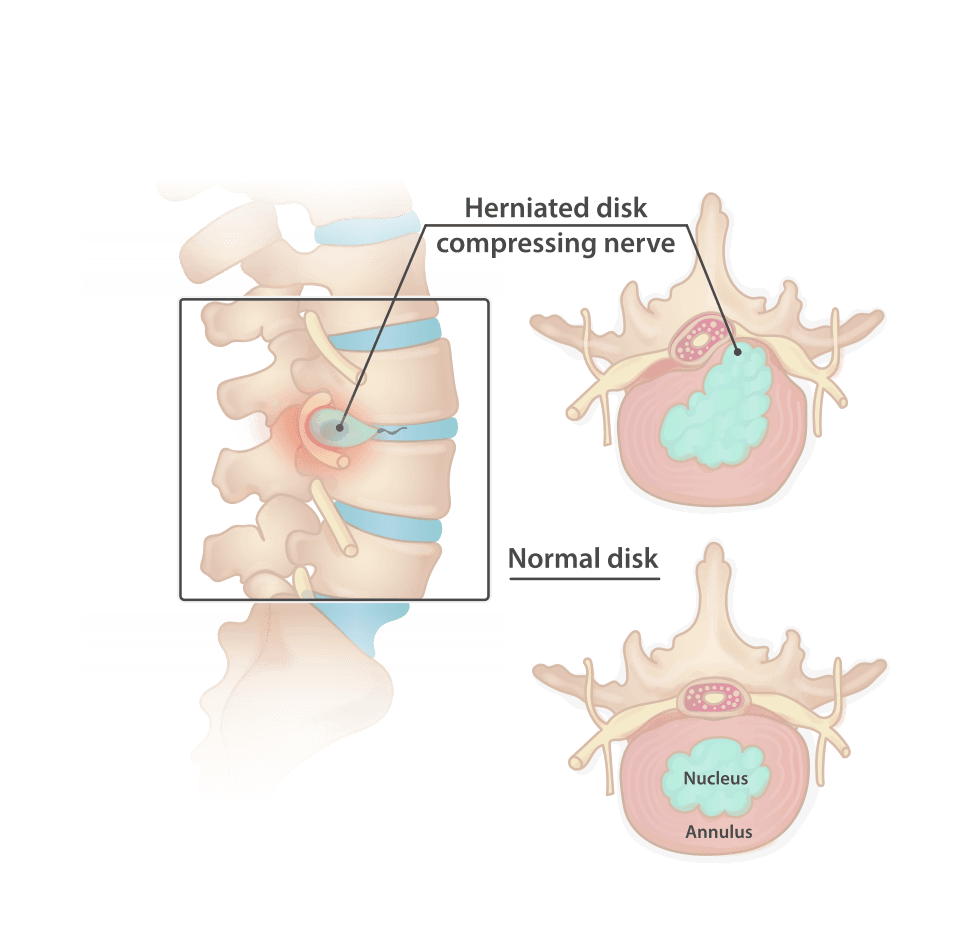
Quick answer: A slipped disc is not literally a disc slipping out of place. It usually refers to a disc bulge or herniation, where the softer inner disc material pushes outward through the tougher outer ring. Sitting long hours may make symptoms worse if the disc or nearby nerve is sensitive, especially when pain increases with sitting, bending, coughing, sneezing, or lifting.
Sitting symptom checklist: when to get assessed
- Pain worsens after sitting, driving, bending, or standing up
- Pain travels into the buttock, thigh, calf, or foot
- Tingling, numbness, burning, or leg weakness appears
- Worsening leg weakness or symptoms affecting both legs
- Numbness around the groin or saddle area
- Bladder or bowel changes, fever, trauma, or unexplained weight loss
What is a spinal disc made of?
A spinal disc sits between two vertebrae. Its job is to help absorb load, allow movement, and keep space between the spinal bones. The disc is commonly described in three parts:
- Nucleus pulposus: the softer, gel-like centre of the disc.
- Annulus fibrosus: the tougher outer ring that surrounds the nucleus.
- Endplates: the top and bottom layers that connect the disc to the vertebrae.
This anatomy is why disc symptoms can be confusing. The disc itself, surrounding joints, muscles, ligaments, and nearby nerves can all contribute to pain.
What actually happens in a slipped disc?
“Slipped disc” is a common patient term, but the disc does not usually slide out like a loose object. Medical sources often describe a herniated disc as the softer inner material pushing outward through a tear or weakened area in the tougher outer layer. If this affects a nearby nerve, symptoms may travel into the buttock, leg, foot, neck, shoulder, arm, or hand depending on the spinal level.
| Term | Simple meaning | What patients should remember |
|---|---|---|
| Disc bulge | The disc extends outward beyond its usual border. | Can be painful or painless. It must be matched with symptoms and examination. |
| Disc herniation | Inner disc material pushes through or beyond the outer ring. | May irritate a nerve and cause radiating pain, tingling, numbness, or weakness. |
| Slipped disc | A common phrase for bulge, herniation, or rupture. | The disc is not simply “out of place”; wording on scans needs clinical interpretation. |
| Degenerative disc changes | Age, load, hydration, and tissue changes in the disc over time. | Common on scans and not always the direct cause of pain. |
Can sitting long hours cause a slipped disc?
Sitting long hours does not automatically cause a slipped disc. However, long sitting may aggravate symptoms when the lower back is already sensitive, when disc tissue is irritated, or when sitting is combined with repeated bending, twisting, poor recovery, low strength tolerance, or sudden heavy lifting after a long inactive period.
This is common in office workers who sit through the day, then feel a sharp pull when standing up, bending to pick something up, driving home, or returning to gym training too quickly.
What symptoms may suggest disc or nerve involvement?
Disc-related pain can overlap with muscle and joint pain, so symptoms alone are not enough for diagnosis. Still, some patterns deserve assessment:
- Lower back pain that gets worse with prolonged sitting
- Pain that travels into the buttock, thigh, calf, or foot
- Tingling, numbness, burning, or electric-like pain
- Pain that increases with bending, lifting, coughing, or sneezing
- Weakness, foot heaviness, or difficulty walking normally
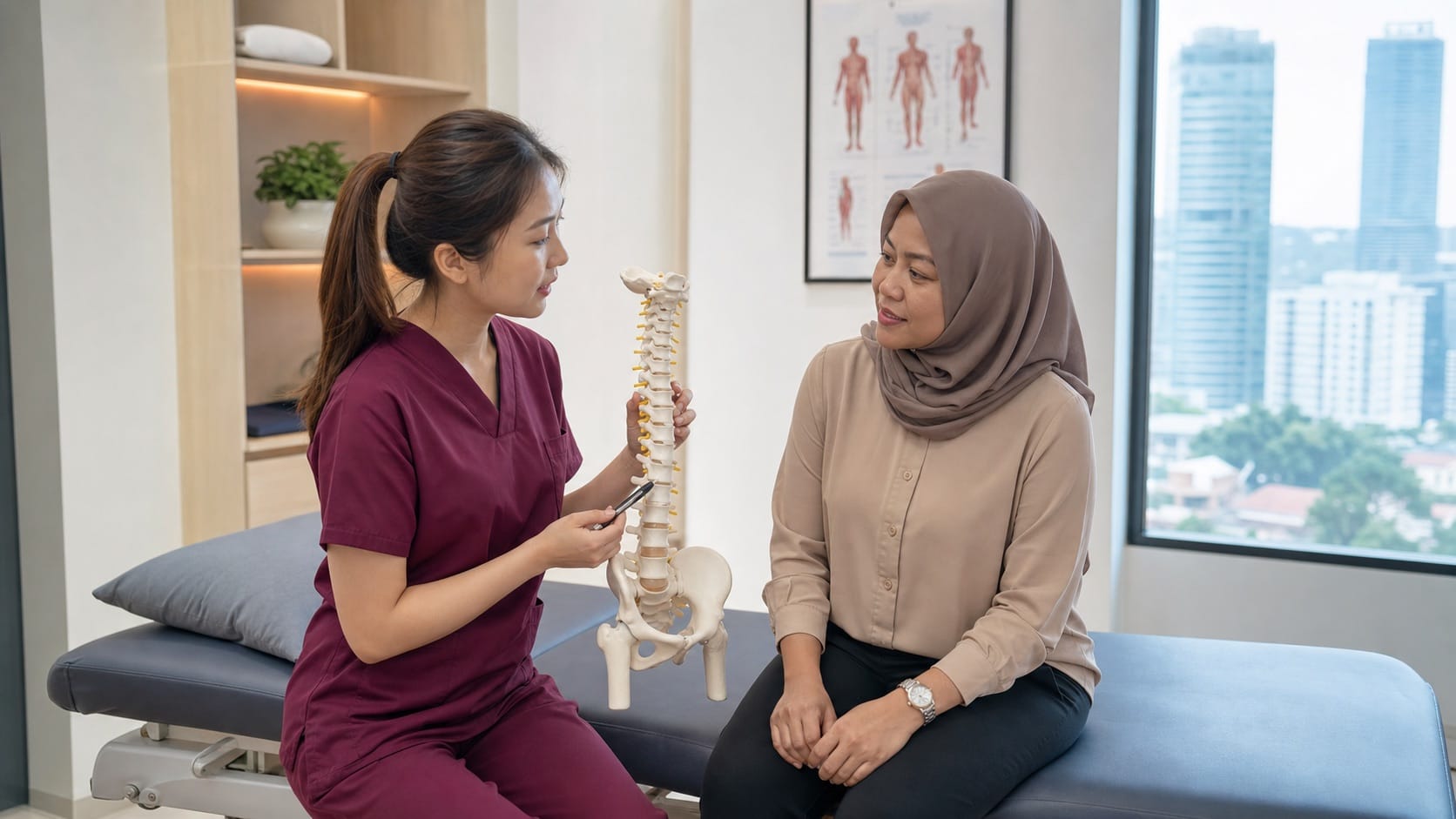
Patient takeaway: Do not judge a slipped disc only from pain intensity or an MRI phrase. The safer question is whether your symptoms, movement tests, and nerve signs match a disc-related pattern.
What does One Spine assess before recommending care?
At One Spine TTDI, we assess before recommending chiropractic care, physiotherapy, rehabilitation, imaging referral, or medical review. For suspected disc-related pain, assessment may include:
- Your pain history, sitting tolerance, driving tolerance, work habits, lifting, sleep, and exercise load
- Lower back, hip, pelvis, and leg movement
- Nerve-related signs such as tingling, numbness, weakness, or pain travelling down the leg
- Strength, sensation, reflexes, and nerve tension testing where relevant
- Red flag screening before deciding whether care is suitable
Can chiropractic or physiotherapy help slipped disc symptoms?
Conservative care may help selected disc-related pain cases, but it depends on assessment. Care may include education, movement modification, pain-calming strategies, spinal or joint care when suitable, physiotherapy support, nerve-related exercise, hip and core rehabilitation, return-to-gym planning, and sitting or workstation changes.
Results vary. If symptoms are severe, worsening, or show concerning nerve signs, medical review or imaging referral may be more appropriate before routine care.
When should you seek medical review urgently?
Seek urgent medical review if back pain comes with worsening leg weakness, numbness around the groin or saddle area, bladder or bowel changes, symptoms affecting both legs, fever, unexplained weight loss, cancer history, major trauma, or severe night pain that does not ease.
Useful internal links
Medical references
These references support the anatomy and symptom discussion. They do not replace personal medical advice.
FAQ
Can sitting too long cause a slipped disc?
Sitting too long does not automatically cause a slipped disc, but prolonged sitting may aggravate disc-related back pain or nerve symptoms in some people. Assessment is useful if pain keeps returning, travels down the leg, or worsens with sitting and bending.
Is slipped disc the same as disc bulge?
Not exactly. “Slipped disc” is a general phrase patients use. A scan may describe a bulge, protrusion, extrusion, herniation, or degeneration. The wording should be interpreted together with symptoms and clinical examination.
Can a slipped disc heal by itself?
Many disc-related symptoms improve over time with suitable conservative management, but this depends on the person, severity, nerve signs, and red flags. Worsening weakness or bladder and bowel symptoms need urgent medical review.
Where can I get checked for slipped disc symptoms near TTDI, KL, or PJ?
One Spine Chiropractic & Physiotherapy Centre is located in TTDI, Kuala Lumpur, near PJ and Damansara. We assess symptoms, movement, nerve signs, sitting triggers, and red flags before recommending care or referral.
Book a Disc-Related Back Pain Assessment
If sitting long hours keeps triggering back pain, sciatica-like leg symptoms, tingling, or numbness, start with an assessment-first visit at One Spine TTDI.
This article is for education only and is not a diagnosis. Slipped disc symptoms, imaging needs, and care suitability depend on individual assessment. Seek urgent medical care for severe, sudden, worsening, or unusual symptoms.