Patient guide | Hip Pain / Back Pain / Sciatica
Hip pain when sitting, walking, standing up, climbing stairs, or sleeping on one side can come from the hip joint, muscles, tendons, pelvis, lower back, or nerve irritation. At One Spine TTDI in Kuala Lumpur near PJ, we assess your hip movement, lower back, gait, strength, and red flags before recommending chiropractic, physiotherapy, rehabilitation, or referral.
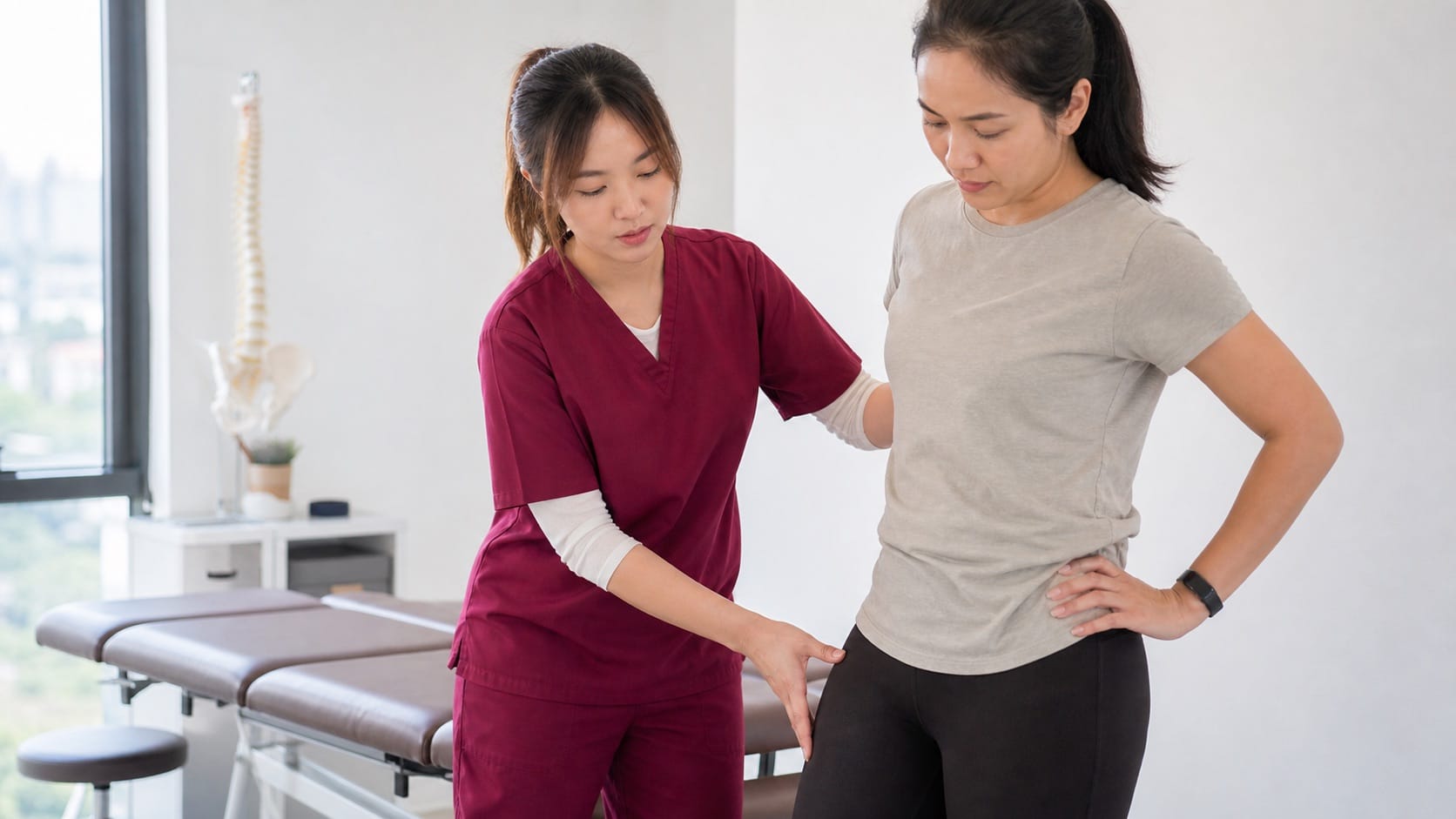
Quick answer: Hip pain when sitting, walking, standing up, climbing stairs, or sleeping on one side can come from the hip joint, muscles, tendons, pelvis, lower back, or nerve irritation. At One Spine TTDI in Kuala Lumpur near PJ, we assess your hip movement, lower back, gait, strength, and red flags before recommending chiropractic, physiotherapy, rehabilitation, or referral.
What could be causing hip pain?
Hip pain is not always from the hip joint alone. Some patients feel pain at the groin, outer hip, buttock, thigh, or lower back. Possible contributors include hip joint irritation, muscle strain, tendon overload, bursitis-like irritation, pelvic or sacroiliac loading, lower back referral, sciatica-like nerve sensitivity, reduced hip mobility, or training overload. The location and trigger pattern matter more than the symptom name.
What does One Spine assess before recommending care?
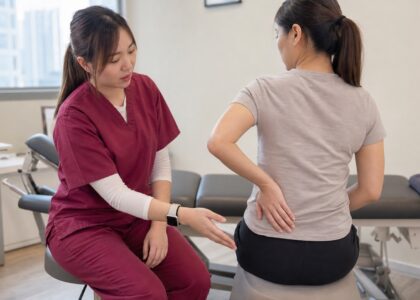
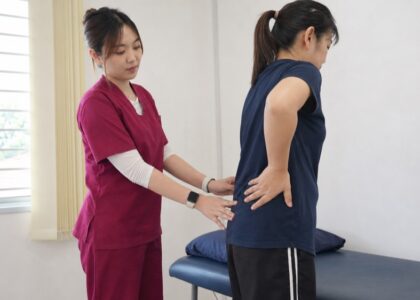
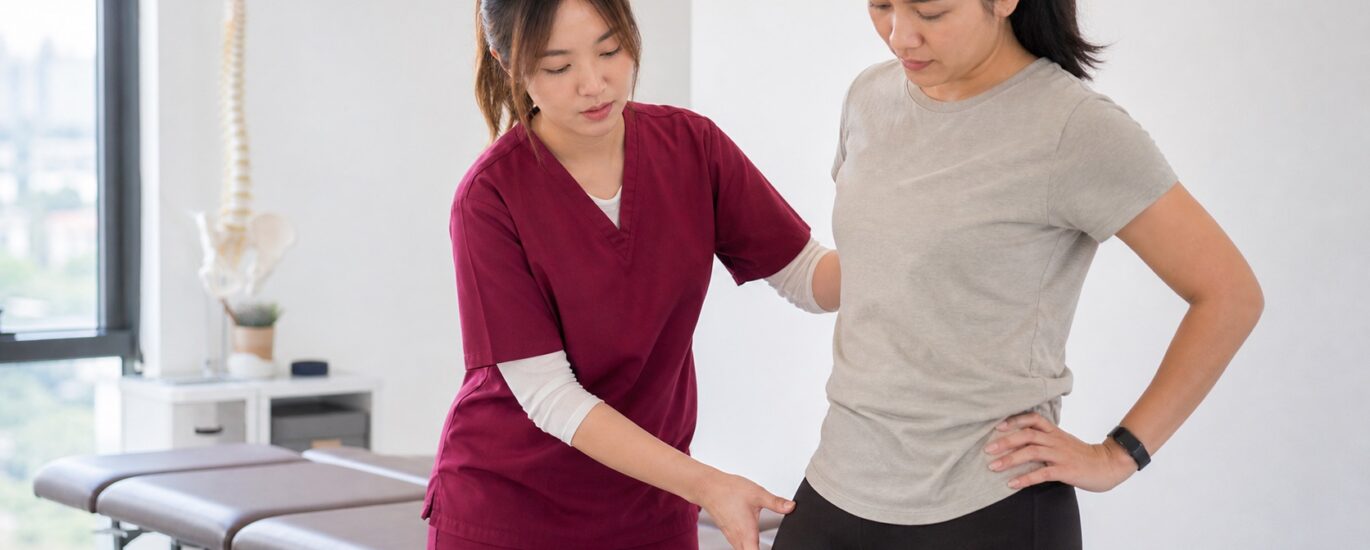
We check where the pain is felt, what movements reproduce it, how your hip and lower back move together, walking pattern, squat or step-up tolerance, glute and core control, nerve signs when needed, previous injuries, training load, sitting or driving habits, and red flags. This helps us decide whether the plan should focus on chiropractic joint mobility, physiotherapy, rehabilitation, exercise progressions, shockwave referral when tendon-related and suitable, or medical review.
What care options may help?
Depending on the assessment, care may include hip and pelvis mobility work, lower back care, soft tissue support, strengthening, gait or squat retraining, home exercise, load modification, or referral for imaging or medical review when appropriate. Results vary because hip pain can come from different structures and some cases require medical or orthopaedic input.
| Pattern | What it may suggest | What assessment checks |
|---|---|---|
| Groin or front hip pain | Hip joint irritation, hip flexor strain, impingement-like loading, or arthritis-like stiffness may be considered. | Hip range of motion, squat, step-up, rotation, history and red flags. |
| Outer hip pain | Tendon or bursa-related irritation may be involved, especially with side sleeping or stairs. | Side-lying sensitivity, hip strength, walking load and pelvic control. |
| Buttock or back-of-hip pain | Lower back, sacroiliac joint, deep hip muscles, or nerve irritation may overlap. | Lumbar movement, nerve screening, hip mobility and sitting tolerance. |
| Pain travelling down the leg | Sciatica-like nerve symptoms or referred pain need closer assessment. | Strength, sensation, reflexes where appropriate, and red flags. |
When should this be medically reviewed?
Seek medical review promptly if hip pain follows a fall or trauma, you cannot bear weight, the hip looks deformed, pain is severe with sudden swelling, fever is present, the leg becomes weak or numb, symptoms worsen quickly, or there is unexplained weight loss or night pain.
What internal pages should this connect to?
Frequently asked questions
Can hip pain come from the lower back?
Yes. Hip, pelvis and lower back symptoms can overlap. Pain around the buttock, outer hip, thigh or leg may sometimes be referred from the lower back or nerve pathway, so assessment should not focus only on the painful spot.
Should I stretch my hip if it hurts?
Gentle movement may help some people, but forcing stretches can aggravate certain tendon, joint or nerve patterns. If stretching increases pain, tingling, limping or night pain, get assessed.
Can chiropractic or physiotherapy help hip pain?
They may help selected cases, depending on the cause. Some patients need hip mobility, lower back care, strengthening, movement retraining or load changes. Others may need medical review first.
When should hip pain be checked?
Get checked if it lasts more than a few days, affects walking, sleep, stairs, work, training, or keeps coming back despite rest or stretching.
References
- Mayo Clinic: Hip pain, when to seek medical care
- Cleveland Clinic: Hip pain causes and treatment overview
Book an assessment at One Spine TTDI
If your pain keeps returning, affects sitting, walking, work, exercise, or sleep, the next useful step is a proper assessment. One Spine is located at 38 & 40, Jalan Tun Mohd Fuad 1, TTDI, Kuala Lumpur, near PJ, Damansara, Mont Kiara and Bangsar.
This article is for general education only and does not replace a personalised assessment, medical diagnosis, or emergency care. Suitability for chiropractic, physiotherapy, rehabilitation, shockwave, exercise, imaging, or referral depends on assessment findings. Results vary.